Li Brocade
Introduction
Li brocade is a traditional textile art form originating from the Li ethnic group in Hainan province, China. Often referred to as a "living fossil" of Chinese textiles, it boasts a history spanning over 3,000 years. Renowned for its intricate craftsmanship and vibrant cultural symbolism, Li brocade involves four key techniques: spinning, dyeing, weaving, and embroidery. Its patterns, inspired by nature and daily life, serve as a visual language documenting Li culture.
History
Li brocade originates with the Li ethnic group, one of the earliest inhabitants of Hainan Island and the pioneers of cotton cultivation in China. Historically, the craft was a matrilineal tradition, with women learning spinning, dyeing, and weaving techniques from a young age. As early as the Han Dynasty (206 BC–220 AD), Li brocade was highly valued and presented as tribute to the imperial courts. While there were over 50,000 practitioners by the mid-20th century, modernization led to a sharp decline, leaving only around 1,000 by the 2000s. Recognized by UNESCO in 2009 as intangible cultural heritage requiring urgent safeguarding, dedicated efforts led to the removal of traditional Li textile techniques (spinning, dyeing, weaving, and embroidering) from the urgent safeguarding list. On December 5, 2024, they were inscribed on the Representative List of the Intangible Cultural Heritage of Humanity.
Characteristics
Li Brocade is distinguished by its intricate craftsmanship and symbolic designs. The entire process involves four main techniques: spinning, dyeing, weaving, and embroidery. Each step requires exceptional skill and patience, resulting in textiles that are both durable and visually stunning.
The brocade is traditionally made from cotton and wild hemp, which are collected and processed into fine yarns. The spinning process is particularly challenging, requiring artisans to rub fibers slowly with a spinning wheel to achieve the desired texture. The yarns are then dyed using natural pigments, creating vibrant colors such as red, black, blue, and occasionally yellow and green.
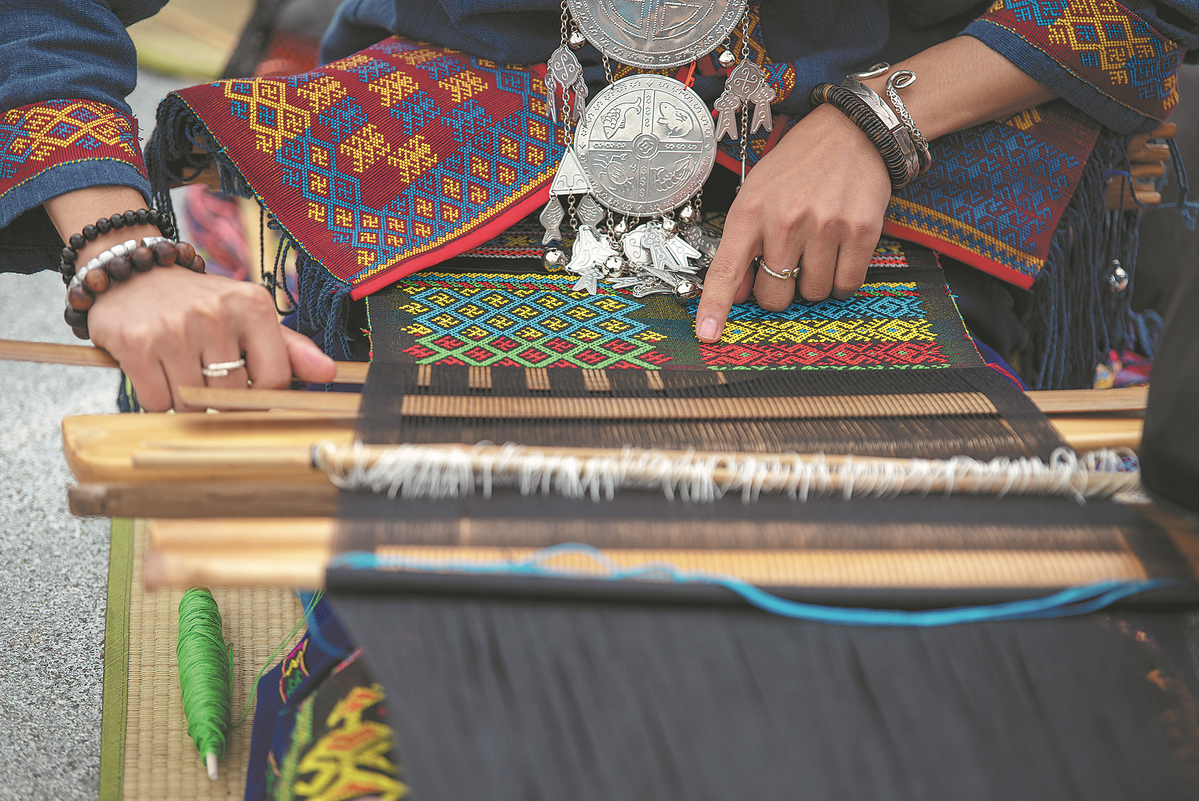
Weaving is performed on a waist loom, a traditional tool that allows artisans to create intricate patterns by passing colorful threads back and forth. The designs often feature motifs inspired by nature, such as birds, flowers, rivers, and mountains, as well as geometric shapes and celestial symbols. These patterns carry profound cultural significance, representing the Li people's beliefs, aspirations, and connection to their environment.
Embroidery adds another layer of detail to the brocade, with artisans using fine needles to create double-sided designs. This technique is particularly time-consuming, with small pieces taking weeks to complete and larger items requiring several months. Despite the labor-intensive process, artisans insist on preserving the traditional methods to maintain the brocade's authenticity and charm.
Cultural Significance
Li brocade is an embodiment of Li identity and oral history. Without a written language, the Li people encode myths, rituals, and environmental knowledge into textiles. Each piece functions as a "historical book," preserving traditions like the worship of ancestral spirits or celebrations of harvests. The craft also reflects gender roles, historically empowering Li women as cultural custodians.
Traditionally, Li Brocade was used in various aspects of daily life, from clothing and accessories to household items and ceremonial artifacts. It also played a role in social and spiritual practices, with specific designs reserved for weddings, festivals, and rituals. The brocade's vibrant colors and intricate patterns were believed to bring good fortune and protect against evil spirits.
Modern Applications
Fashion and Design
Li Brocade has found new life in the modern fashion industry, with designers incorporating its elements into contemporary creations. The craft's intricate patterns and vibrant colors have inspired clothing, accessories, and home decor items, bridging the gap between tradition and innovation.
Local artisans and designers have also embraced innovation, creating products such as bags, scarves, umbrellas, and jewelry that appeal to younger audiences.
Cultural Promotion
Efforts to promote Li Brocade have intensified in recent years, with training programs, exhibitions, and cultural exchanges bringing the craft to a wider audience. In Hainan, schools have introduced Li Brocade courses to educate the younger generation about the craft's history and techniques. Training centers and cooperatives have also been established to support local artisans and preserve the tradition.








